


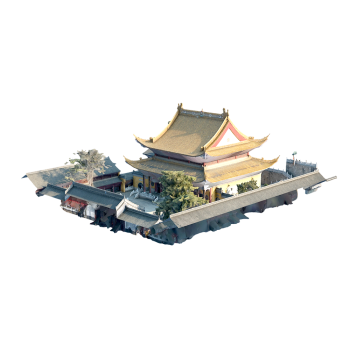
3D Model Rendering of the Great Hall of Jinshan Temple
Located in Zhenjiang City, Jiangsu Province, China, Jinshan Temple is one of the famous ancient Buddhist temples in China. It was built in the Eastern Jin Dynasty. The roof of the main hall adopts the top of the mountain with heavy eaves (also known as the Nine Ridges Hall), which is one of the higher-grade architectural forms in ancient Chinese architecture. The roof is covered with yellow glazed tiles, which is a common color used in ancient Chinese royal or important temple buildings, symbolizing solemnity and dignity. The four corners of the building eaves are tilted upward to form a beautiful cornice shape, which is a typical feature of traditional Chinese architecture.
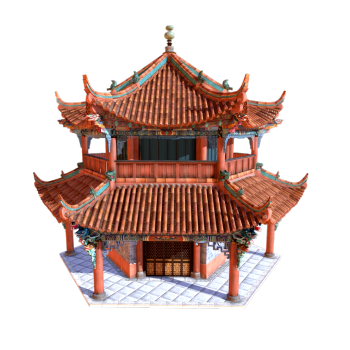
Chinese Temple Pagoda
Adapt to various ancient styles and historical scenes-can be used as the core landmark of temple buildings, the embellishment landscape of landscape gardens or the display model of historical relics; With ancient cypress, stone steps, incense burner and other elements, the temple atmosphere can be strengthened, and the poetic scene of "tower shadow Hengjiang" will be presented when integrated into the landscape background. The detailed design supports static display or cultural popularization (such as hierarchical symbolic meaning and architectural technology analysis); The overall style is solemn and flexible, it not only reflects the solemn sense of religious architecture, but also conveys the light and elegant aesthetic conception through the cornices, wind chimes and other elements, which meets the needs of ancient style animation, cultural heritage digitization, historical theme creation and so on.

Nepalese Cultural Heritage Svayambnath Temple Stupa
A stupa is a Hindu and Buddhist temple monument with a stupa-like shape at the top. It is usually placed in the open space of the religious complex, which is between four and eight feet in height. These sculptures are usually carved from stone, but also made using clay or mortar. This particular Chaitya sculpture is located in the Swatambuenat temple (Swayambhunath) in Kathmandu, Nepal, and was built in the 16th century and sits on the hill in front of the temple, along the ancient route leading to the stupa.

Nepal Kathmandu 16th century building four-sided stupa
This stupa sculpture is located in the Swatambnath temple (Swayambhunath) in Kathmandu, Nepal. The sculpture, which features four statues of Buddha, was carved on a stupa and was built in the 16th century. "Swayambhu" in Sanskrit means "self-born" or "self-emerging", indicating that it was not artificially constructed, but naturally generated. Therefore, the locals believe that the entire hill, including most of the sculptures in it, was raised by natural forces.

Kathmandu, Nepal Sixteenth Century Architecture Svayambnath Temple Stupa
A stupa is a Hindu and Buddhist temple monument with a stupa-like shape at the top. It is usually placed in the open space of the religious complex, which is between four and eight feet in height. These sculptures are usually carved from stone, but also made using clay or mortar. This particular Chaitya sculpture is located in the Swatambuenat temple (Swayambhunath) in Kathmandu, Nepal, and was built in the 16th century and sits on the hill in front of the temple, along the ancient route leading to the stupa. This

Japan's Zen'in Yamamon
The Zen'in Yamaguchi is a landmark building of the Zen'in Temple located in Kyoto, Japan, and is also the largest temple gate in Japan. Built in 1621, with a height of 24 meters and a width of 50 meters, its magnificent scale and unique architectural style have made it an important symbol of Japanese Buddhist architecture. The design adopts a double eaved gable roof covered with traditional black tiles, reflecting the delicacy and solemnity of Japanese architecture. The Three Gates symbolize the three Buddhist doctrines of emptiness, formlessness, and unwillingness, also known as the "Three Liberation Gates", meaning that spiritual liberation can be achieved through these gates.

Stone Carving of the Northern Wei Vows Buddha Pagoda during the Northern Wei Dynasty in the 4th Century
This Buddhist scripture pillar engraved with sacred Buddhist scriptures belongs to a group of miniature pagodas (scenic pagodas), which are only found in the Gansu Corridor in northwest China. Their age ranges from 426 AD to 36 AD, some of which bear the names of Buddhist donors who entrusted them at home. A pagoda is a circular building built to worship Buddhist relics. Miniature pagodas may be commemorating visits to holy sites or representing donations to religious groups and sites.

Sangi Buddha Tower
The Sangji Buddhist complex is located on a hill about 40 kilometers away from Bhopal, the capital of Madhya Pradesh. Although it is located in a remote country, it is world-famous as the "city of pagodas. During the Peacock Dynasty, King Ashoka built this monumental historical site to house the Buddha's sacred relic. The monument consists of a group of Buddhist buildings, including megalithic pillars, palaces, temples and monasteries. Most of the history of these buildings can be traced back to the 2nd century BC to the 1st century BC. Before the 12th century, it has been the teaching center of Indian Buddhism. At present, it is the oldest extant Buddhist shrine and was listed in the world heritage list in 1989.

Popular Models

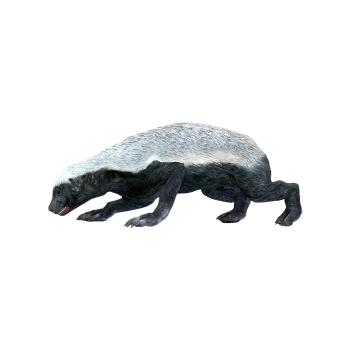
Honey Badger (3D animated model)
192 View
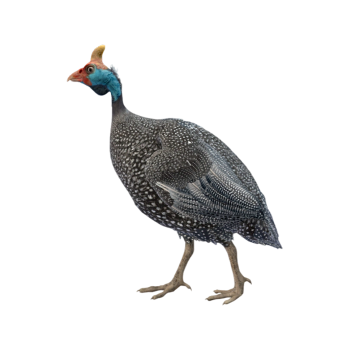
Guinea fowl (3D animated model)
163 View
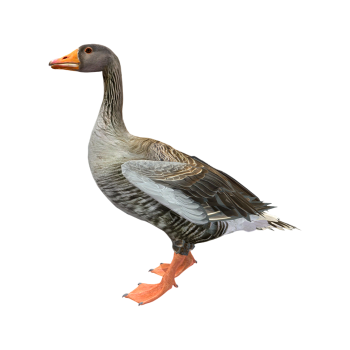
Wild Goose (3D animated model)
185 View

Red Fox (3D animated model)
153 View
Random Model


dove
916 View

Bees (with 3D animated models)
1345 View
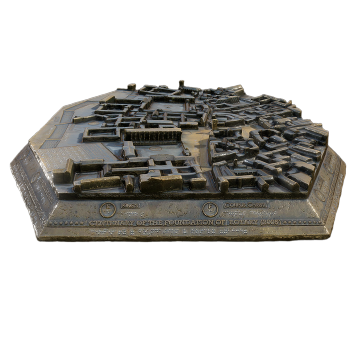
14th century map of Cambridge, UK
997 View

2014 Nikon D3300 digital SLR camera
948 View



Grilled ribs with potato balls
717 View

Volvo L220H wheel loader
1112 View

chameleon
1284 View